All services

    Practice 04

    People & Kolbe Practice

    The psychology of merging tech teams — now compounded by AI. Most M&A still fails on people, not platforms. In the next twelve months, the gap between teams that have adapted to AI and teams that have not will decide which deals deliver and which quietly underperform.

    The thesis

    AI is breaking teams. Kolbe is how we put them back together.

    Four shifts are happening at once — to advisory firms, to acquisition targets, to integration playbooks, and to Corp Dev itself. Each is a people problem dressed up as a technology one. Roles are being compressed, instincts are being suppressed by fear, and operating models that rely on a handful of senior operators are being absorbed into structures that quietly destroy them.

    Our Kolbe Psychology practice exists to make the human variable measurable, and then to act on it. Kolbe diagnoses how a person — and a team — instinctively takes action under pressure. In the AI transition, that is the difference between a team that adapts and a team that stalls. We use it to redesign roles, configure Pods, and de-risk the integration of acquired teams before Day 1.

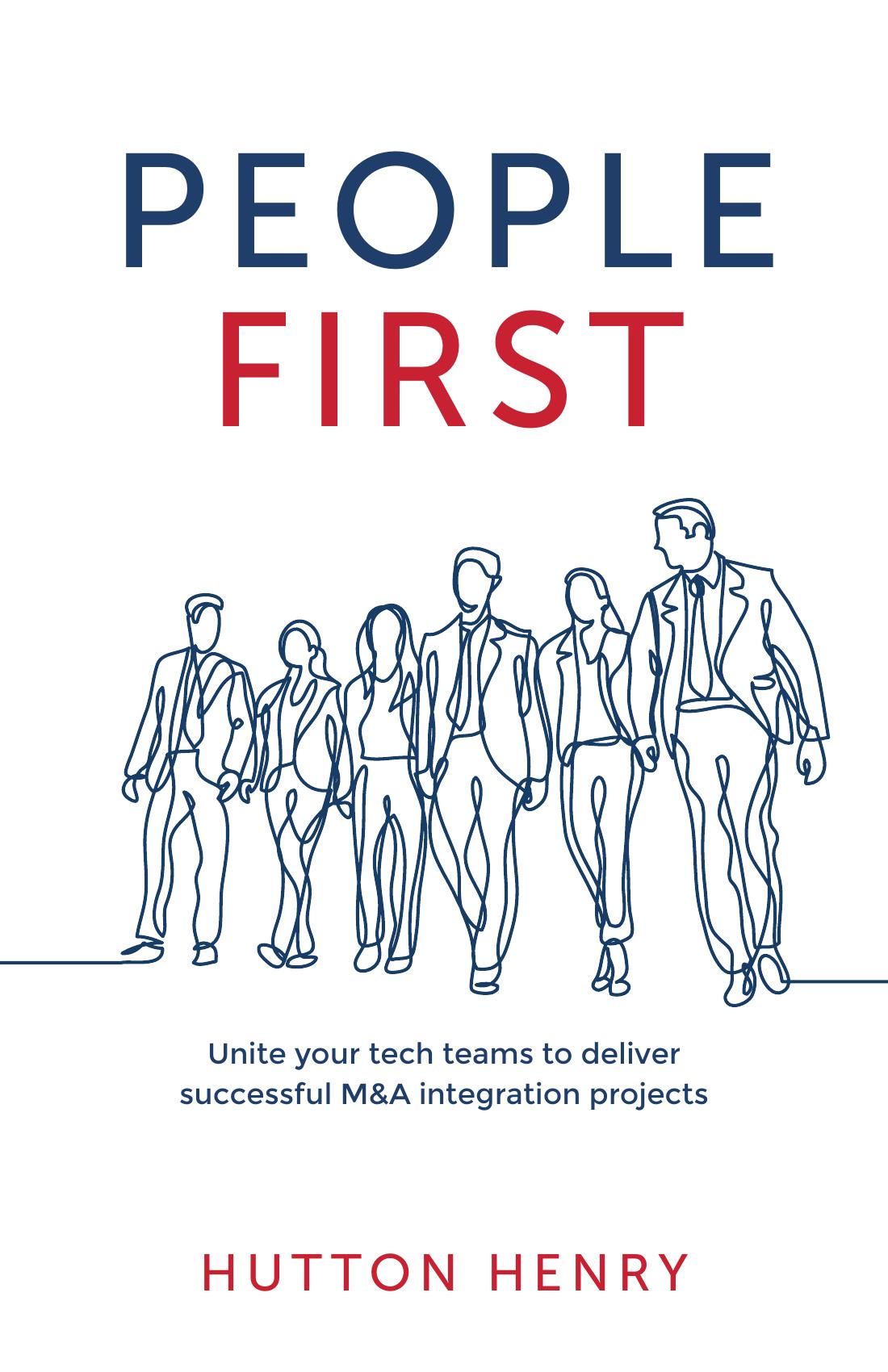
    Hutton Henry is a nine-year Kolbe consultant specialising in M&A integration and the author of People First (Rethink Press, 2018) — the playbook for treating technology teams as people, not resources, through M&A. The framework below is drawn from The Corp Dev Challenge is More Than AI, It's People, our June 2026 paper.

    The four shifts — and what we do about each

    Why deals that looked sound in 2024 are behaving differently now.

    01

    Advisory firms are restructuring

    The pyramid of seniors-over-juniors that defined professional services for a century is being compressed by AI into small, senior-led pods. The thinking you receive from a firm is no longer independent of how that firm is organised, or who is actually doing the work.

    What we do

    We audit your advisory panel against the Pyramid/Pod test — who is actually doing the thinking, what AI leverage they bring, and where you are paying for hedged, committee-approved output. You leave with a shortlist rebuilt for senior-led delivery.

    02

    Acquisition targets are bifurcating

    AI-native firms are generating revenue per head an order of magnitude above their traditional rivals — and they now compete directly with incumbents three times their size. The rest are quietly losing operating leverage.

    What we do

    Our AI-Readiness Diagnostic on each target tells you whether you are buying genuine AI-native operating leverage or AI-washed legacy. Plugged into Tech DD, it sizes the post-close people and operating-model risk before you sign.

    03

    Integration playbooks are misfiring

    Harmonise systems, absorb the team into functional silos, layer in process. Those moves were built for businesses where value lived in contracts and assets. When value lives in interlocking AI workflows and a small team's tacit knowledge, the same moves destroy what you bought.

    What we do

    We select the integration archetype — Absorb, Preserve, Symbiose or Holding — against the deal thesis, and map the acquired Pod with Kolbe before Day 1. Roles, reporting lines and tooling are redesigned to keep the operating model you paid for intact.

    04

    Corp Dev itself is exposed

    The analytical, research and synthesis work at the core of deal origination and diligence is precisely the work AI is most rapidly transforming. Your own team already knows this — even if the conversation has not happened yet.

    What we do

    A 90-day redesign of your Corp Dev function — diagnose, decide, operate — run alongside your leadership. You move from a junior-leveraged team to a senior Pod with AI in the workflow, on a rolling cycle your team owns.

    The Kolbe offering

    Move the team from Panic to Wouldn't Go Back.

    Kolbe measures conation — the instinctive way a person takes action. It is the missing diagnostic in most M&A people work, which still over-indexes on skills (cognition) and culture (affect). Mapped against Jason Feifer's four phases of disruption, Kolbe tells us exactly where a leadership team, an advisory panel or an acquired company is stuck — and what to redesign to move them forward.

    The Pod operating model in the next section is the outcome. Kolbe is how we get there without breaking the people who have to deliver it.

    "Our fears about new technologies often aren't even about the new technologies. They're really about a larger societal shift that those technologies represent."Jason Feifer
    1. 01

      Panic

      Defensive, short-term, protecting structure. Kolbe surfaces where instinctive strengths are being suppressed by fear — and gives leaders a shared, non-judgemental language to name it.

    2. 02

      Adaptation

      Experimenting with tooling, willing to redesign roles. We map each person's Kolbe Modus Operandi so the redesign plays to instinct rather than against it.

    3. 03

      New Normal

      AI is in the workflow. We re-cast roles around conation so Fact Finder, Follow Thru, Quick Start and Implementor strengths combine into a working Pod — not a committee.

    4. 04

      Wouldn't Go Back

      A structural advantage. Conation becomes the operating principle: every new hire, advisor and acquired team is assessed and configured the same way. The Pod becomes repeatable.

    The new operating model

    Pyramid vs. Pod.

    A team of three configured as a Pod can produce the output of a traditional team of ten. AI handles the 60–70% of work that was analytical execution. The remaining 30% — judgment, framing, relationships, ethical accountability — is where human expertise concentrates. This applies as much to your Corp Dev function as to the firms you hire and the targets you buy.

    Traditional PyramidAI-Native Pod
    ShapeBroad junior base, thin senior tierA partner, two seniors, no juniors
    Where the thinking is doneJuniors draft, seniors reviewSeniors do the work, AI does the execution
    LeverageHeadcountTooling and judgment
    Pricing logicTime and materialsOutcomes
    Failure modeFiltered, hedged, committee-approvedDirect, opinionated, accountable

    Integration risk

    What you're actually buying — and what you can accidentally destroy.

    The most consequential risk in acquiring an AI-native firm is this: the qualities that make it valuable are precisely what traditional integration playbooks destroy. Disaggregating a Pod into the acquirer's functional silos. Forcing the acquired team onto the acquirer's tooling. Replacing a senior operator with a programme manager. Each move looks like control. Each one degrades the operating model you paid for.

    We map the four integration archetypes — Absorb, Preserve, Symbiose, Holding — against the deal thesis, and help leadership choose deliberately rather than by default.

    People First by Hutton Henry — book cover

    The book behind the practice

    People First — the field manual.

    Everything we do in the Kolbe Psychology practice traces back to People First, Hutton Henry's 2018 book on technology team integration through M&A. The four integration archetypes, the Day 1–100 model, the conation-led role redesign — they're in the book, and they're what we run for you here.

    Where we work with you

    Three pillars. One operating system.

    01

    The advisors you hire

    Are you getting senior thinking, or a committee-approved version of it? We diagnose your advisory panel against the Pyramid/Pod test and help you rebuild it for the next twelve months.

    02

    The targets you evaluate

    AI-native or AI-washed? We assess where the leadership sits on the four phases, whether the operating model survives a doubling of headcount, and how to integrate without destroying value.

    03

    Your own team

    The same forces reshaping advisory firms and acquisition targets are reshaping the Corp Dev function itself. We run a 90-day redesign — diagnose, decide, operate — alongside your leadership.

    Three ways to start

    Packaged engagements — scoped, priced, and outcome-led.

    Each engagement is fixed-scope with a defined output. They can run standalone, or stack — most clients start with the Diagnostic, then move into Integration or Function Redesign.

    A2–3 weeks

    AI-Readiness & Pod Diagnostic

    A fixed-scope diagnostic for a single team — your Corp Dev function, an advisory panel, or an acquisition target. Kolbe mapping, Pyramid/Pod assessment, and a written verdict on where the team sits on Panic → Wouldn't Go Back.

    You leave with

    • Team conation map
    • Pyramid vs. Pod scoring
    • Phase placement + risk register
    • Redesign recommendation
    BPre-signing → Day 100

    Integration People Plan

    Deployed alongside Tech DD. We assess the target's Pod, select the integration archetype against the deal thesis, and build the Day 1–100 people plan that protects the operating model you are paying for.

    You leave with

    • Target Pod assessment
    • Archetype selection (Absorb / Preserve / Symbiose / Holding)
    • Day 1–100 people plan
    • Leadership coaching through close
    C90 days, then rolling

    Corp Dev Function Redesign

    A diagnose-decide-operate cycle for your own Corp Dev team. We move you from a junior-leveraged pyramid to a senior Pod with AI embedded in origination, diligence and integration — on a 90-day cadence your team continues to run.

    You leave with

    • Function diagnostic
    • Target operating model
    • Role redesign + Kolbe re-cast
    • 90-day execution sprint with leadership

    Why this is urgent

    The 12-month window.

    This is not a five-year transformation story. The evidence indicates it is happening on a twelve-month horizon — including to the targets you are evaluating right now. Your team are already ahead of you on AI. The role of a Corp Dev leader is no longer to issue an AI strategy. It is to redesign the function with them, on a rolling 90-day cycle, before the market does it for you.

    Bring us in early

    Re-shape the team that has to deliver the deal.

    Kolbe-led diagnostics, operating model redesign and integration coaching — built for the AI horizon.